
Ben Webster (1909-1973) – Duke Ellington Orchestra – Cotton Trail (1940). Accessed on 19/04-2023 from: https://youtu.be/uzMhGj-YXww
Ben Webster’s version of “Cotton Tail” appears to be a high-energy jazz composition with a driving swing feel that propels the music forward. Webster seems to be a virtuoso of the saxophone. He applies techniques such as vibrato, articulation, phrasing, dynamics, and blues and swing phrasing. In using these techniques, he produces a distinctive sound and feel. His playing appears to be characterized by a deep, rich tone and his ability to play with great emotion and expressiveness. One notable feature noticed is the use of octaves, which he employed to create a fuller and more powerful sound in his solos. The saxophone interacts with the rest of the orchestra throughout the song. The other instruments seem to accent the melody and the end of phrases. The energy of the music is evident. However, Webster’s performance in some phrases produces a relaxed and laid-back feel, perhaps creating contrast. Webster’s use of dynamics is also noteworthy in this work. He plays with a great range of volume and intensity, moving seamlessly between quiet, introspective passages and fiery, high-energy sections. The textures of Ben Webster’s version of “Cotton Tail” can be described as layered and complex. The saxophone provides the leading melodic and soloing voice, while the other instruments provide harmonic support and rhythmic drive. The textures constantly change throughout the song, with the quartet moving seamlessly from the whole ensemble playing to individual solos and back again. One example of a textural change in the song can be heard during the saxophone solo in the middle section of the piece. During this solo, the rest of the quartet drops out briefly, leaving only the saxophone playing, creating a more sparse and intimate texture. The quartet then gradually returns, building the texture and momentum of the song back up to its energetic and driving conclusion. The composition’s virtuosity of the performer, the flawless shifts in dynamics, textures, and rhythmic feel, along with the driving force of the entire orchestra, were highly appealing. Although I am not an ardent follower of jazz music, I recognize that it could present a new frontier to explore the diverse range of rhythmic possibilities.
Maynard Ferguson (1928-2006), Stan Kenton Orchestra – Artistry in Rhythm (1946). Accessed on 25/04/2023 from: https://youtu.be/msEqWQuAVXk
“Artistry in Rhythm” is a classic big band jazz tune composed by Stan Kenton, featuring a memorable trumpet solo by Maynard Ferguson. The song was first recorded in 1946 by the Stan Kenton Orchestra. The introduction of the work seems to set the stage featuring a dramatic and ominous brass fanfare played by the trumpet and trombone. It feels syncopated, legato and staccato. After a little introduction to the theme, there appears to be a drum solo using a few techniques, including rolls and a small fill. The jazz characteristics can be heard throughout the song, including dissonances, tensions, swung notes and blues notes. There is a small piano solo as well before the main role is gained by the trumpet, saxophone and trombone in octaves which appears to provide high-energy phrases and virtuosity playing. Another aspect of the work is the use of dynamics with a great range of volume and intensity from quiet to very loud, adding excitement to the piece. The bass line that is a characteristic of the Baroque continuo appears to be played by the double bass in Jazz Orchestras. Although the piece didn’t immediately catch my attention upon first listening, repeated listening allowed me to appreciate the jazz syncopations, blue notes, and other intricated characteristics of the composition. I enjoyed the piece due to its energetic performance and the clarity of the musical language used.
Carla Bley (1937-), Metropole Orkest – O Tannenbaum (2011). Accessed on 25/04/2023 from: https://youtu.be/vVH59DYP4GM
This arrangement seems to be coming from a classic German Christmas carol. In this arrangement, the Jazz composer approaches it for cello, marimba and accordion, which in itself appears to be a non-conventional choice of instruments. However, it creates a very unique and warm sound. The cello provides rich and resonant bass timbre. Also seems to be adding depth and texture. However, also provides melodic counterpoint support to the melody providing interest. The marimba provides high pitches and bright sounds. However, also provides melodic material to the piece and contrasts with both the other instruments. The accordion provides midrange, full and sustained sounds. It appears to be in charge of the chords and harmony. However, like the other two instruments, there are times when they also play counter-melodic material, balancing the use of the instruments in this arrangement. The Jazz syncopation can also be heard as some subtle harmonic shifts and unexpected rhythmic twists, providing a sense of playfulness and spontaneity. The dynamics in this piece of music appear to increase gradually, leading to a climactic and descending end. Although I admire the composition for its balanced instrumentation and skilful use of individual instruments, I feel it can be viewed as somewhat distorted from the spirit of the original carol. This deviation from the original, however, adds an element of interest and provocation to the piece. By experimenting with unconventional rhythms and harmonies, Bley’s challenges the listener’s expectations and encourages a fresh perspective of a classic tune.
Toshiko Akiyoshi (1946-) – Long Yellow Road (1957). Accessed on 25/04/2023 from: https://youtu.be/-4yKGoSFrD0
“Long Yellow Road” is a jazz composition by Toshiko Akiyoshi that was first recorded in 1957. The composition features a bright and upbeat melody with a driving swing feel. The composition begins with a catchy riff played by the brass section, setting the tone for the rest of the work. Akiyoshi appears to be playing the piano and conducting the band. The tune features several solos, including what seems alto saxophone, standard saxophone and a trumpet. Both saxophone solos are full of virtuosic and expressive qualities. The techniques used appear to be double tonguing, slurring, vibrato, staccato and legato, providing variety to the work. The introduction of the trumpet adds a brighter characteristic to the piece, and it must be said the trumpeter reaches very high pitches. The music is characterised by frequent start-stop moments, creating a syncopated and somewhat uneasy feeling that adds to the overall dynamics of the piece. There seem to be far keys chord changes, which add depth and complexity to the work. The rhythmic feel of the composition is also unique, with the brass section playing accents and syncopated rhythms that kept me on my toes. There seems to be a good balance of very quiet performance with other forte sections that provide excitement to the piece. I have also noticed the ritardando at the end of the piece. Overall I enjoyed the piece as a whole, as the composition is well-balanced in terms of dynamics, instrumentation, and virtuosic solos, with many exciting sections that add to the piece’s energy.
Johannes Brahms (1833-1897) – Waltz in A flat major, Op. 39 No. 15 (1865). Performed by Cziffra György(1921-1994). Accessed on 27/04/2023 from: https://youtu.be/6Oy0w7eLgRk
Johannes Brahms’ Waltz in A flat major, Op. 39, No. 15, is a charming and graceful piece. The composition has a 3/4 time signature typical signature of a waltz. There is a lyrical melody played by the left hand, whiles the right hand is mainly used for accompaniment and harmonic purposes. This Waltz begins with an elegant melody in the right hand with a series of arpeggios in the left hand. The melody appears to be syncopated and is altered through the piece by a series of variations, including diminution, which creates a sense of rhythmic tension and excitement that adds to the impact of the music. Brahams also appears to use harmonic variation using chord inversions and modulation to create interest. There is also the use of ornamentation in b.3, as shown in the picture below.
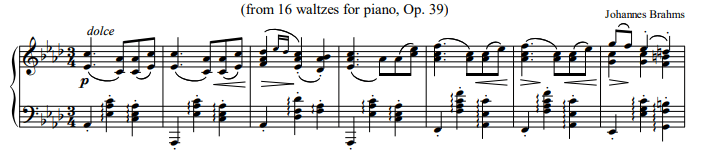
Brahms skillfully employs a variety of dynamic markings, such as crescendos and diminuendos, through the Walz to enhance the sense of excitement, anticipation, and the expectation for a climactic melodic resolution. These dynamic changes add to the emotional impact of the music, creating a sense of tension and release that engages the listener and highlights Brahms’s craft. Thought the work, I noticed how the composer applies contracts in addition to the above illustration. He also uses articulation contrast, legato and staccato and different tempos, such as slowing down or speeding up the music. Overall I feel it is a delightful and well-balanced Waltz worth learning to play on the piano and useful for learning the approach to orchestration in terms of harmonic variety, dynamic treatment and rhythmic flow.
Incognito (1979-), Always There (1991). Mercury Records Limited. Accessed on 27/04/2023 from: https://youtu.be/X6JM8iagb8o
Incognito’s “Always There” featuring Jocelyn Brown have a sense of soul, funky and some Jazzy grooves. The music begins with a bassline setting the tempo of the song. The brass section that comes in adds jazzy and upbeat elements to the song. The voice seems to be powerful and soul-like, powerful, emotional and gospel-like influenced sound. Jocelyn Brown’s vocal techniques seem to include melisma and vibrato, adding a deep feeling to her singing and complementing the orchestration. Thought the song, the brass section plays staccato riffs and accents that punctuate the rhythm and adds energy to the song. The brass section is particularly prominent in the song’s intro. The catchy chorus seems to be talking about love and support, both elements of emotional and sensitive human-related experiences. The song reminds me slightly of the singer Rich Ashley (1966 -) and his most recognised songs like ‘never gonna give you up’ (1987). However, the latest seemed to be more polished and commercial to attract more sales in the general market. Each song uses technology and keyboards to produce a clean and outstanding mix, well-balanced, allowing each instrument to be heard clearly and distinctly. Altogether the genre of the song is not my personal favourite. However, listening to it with a more analytical perspective allowed me to appreciate its various styles and how the instruments and vocals interact with each other. It was an insightful experience to delve deeper into the song’s production and arrangement. I feel I have gained a newfound appreciation for the technical skills and creativity involved in creating the song.
Maurice Jarre (1958-2001) – Annunciation (1977). Accessed on 29/04/2023 from: https://youtu.be/r4QsM2NL8DQ
Annunciation is a beautiful and haunting composition by the French composer Maurice Jarre, well known for his works in film scores. The piece was composed in 1977 and is a musical interpretation of the biblical story of the Annunciation, where the angel Gabriel appears to Mary to announce that she will bear a son. Although this composition, as all the film music, is best understood accompanied by the visual material, the different sections and moments in the piece can easily portray the essence of the biblical story. From the listening, I could discern various effects like practice-like runs by the woodwinds and muted brass. The instrumentation itself seems to be an orchestral standard. In addition, there seems to be a sitar, and the most notorious instrument seems to be the application of Theremin, which adds to the music this divine sense and ethereal sound. The composer balances the melody using all sections of the orchestra. However, the woodwinds and especially the flute seems to have a prominent role. Despite the complexity of the nature of the story, Jarre seems to approach the composition of the piece with simplicity, mainly using octaves between instruments. This approach perhaps gives the piece a timelessness property. In essence, it’s a 2000-year story! The piece’s dynamics are also well balanced, with a soft approach to phrases and gradually building intensity. The dynamic also adds a sense of drama, awe and wonder. I have enjoyed this piece since Jarre blends Easter and Western musical traditions using Sitar and Theremin alongside orchestral instruments. This combination has produced a unique sound that enhances the otherworldly atmosphere of the piece. In addition, how the melody and material are passed from one instrument to another intensifies the sense of communicating the divine biblical event. Overall, I feel that the composition is well-suited for its intended purpose and showcases great creativity.
Kirk Whalum (1958-) – Ascension (1998). Craft Recordings. Distributed by Concord. Provided to YouTube by Universal Music Group. Accessed on 29/04/2023 from: https://youtu.be/d_fUT_asQGs
Ascension is a smooth jazz song by American saxophonist Kirk Whalum. The song seems to feature a blend of smooth jazz, gospel, and R&B styles. The point where all those stylistic characteristics of the genres come together appears to be the use of improvisation, repetition, strong vocal harmonies and emotional expression. The use of melodic counterpoint in voices is a technique often associated with gospel music. The grooves with a strong backbeat provided by the rhythm section are typical of R&B, while the syncopated rhythms are connected to Jazz music. The dynamics and contrast seem to be very effective in the composition. The soft and introspective beginning of the song contrast with the energetic, exuberant chorus, creating, in a way, a sense of tension and release. The tone of the saxophone is very smooth and warm. Kirk appears to display a diverse range of techniques and pitches to create an interesting and dynamic piece. One technique that stands out is the long sustained notes, producing anticipation and excitement. Overall, I enjoyed the piece due to the uplifting feeling produced by the groove and the warm and highly energetic tone of the, at the time, very lyric performance of the saxophone by Kirk.
 Orchestration and Arrangement