
Part 1 Analysis
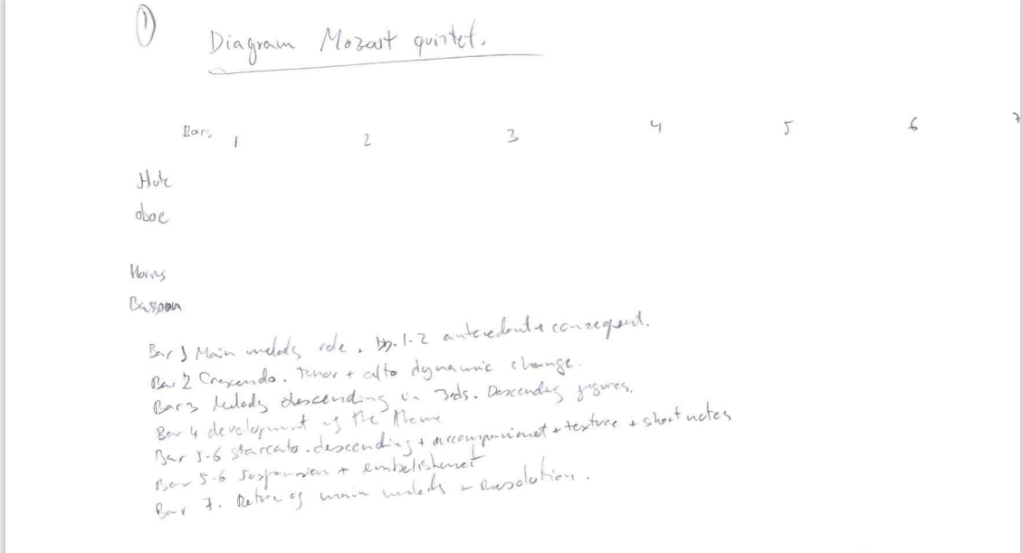
a) Mozart: Adagio K.457 (adapted)
b) Desmond Clarke: Sinfonia (adapted)
c)Berg: Zwolf Variationen uber ein eigenes
Part 2: Orchestration.
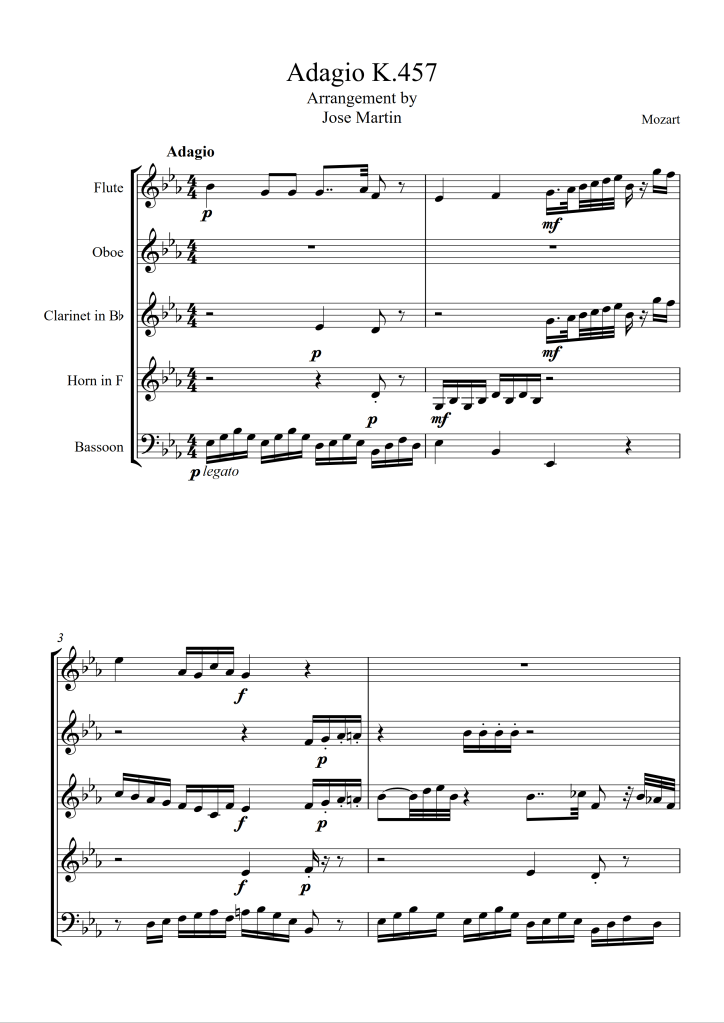
a) Mozart: Adagio K.457 (adapted)
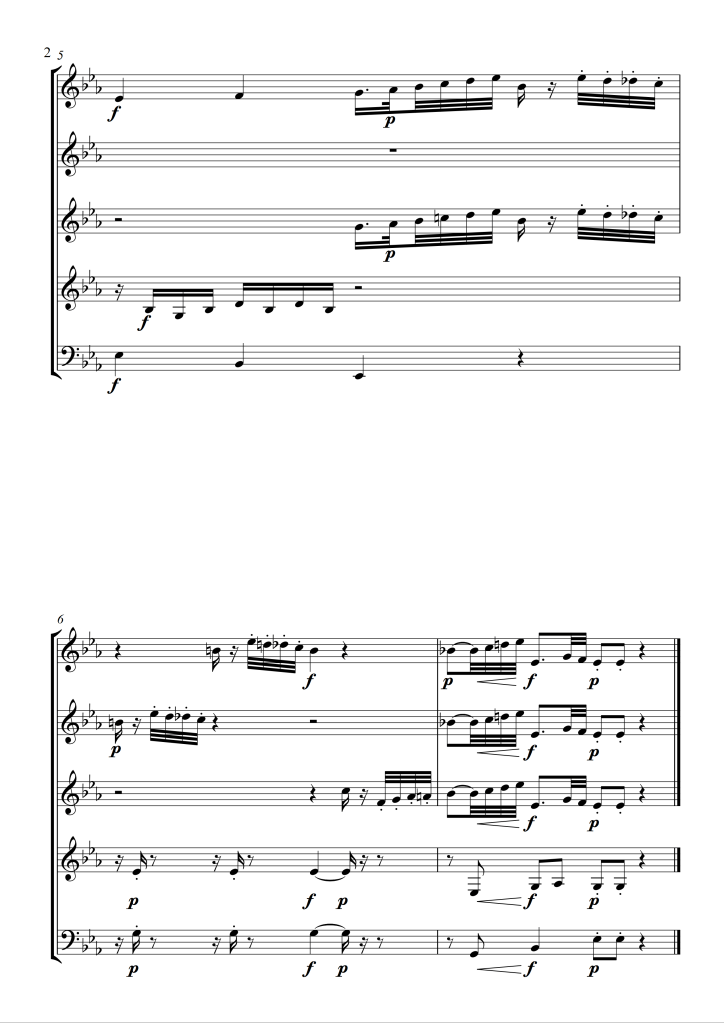
Mp3: here
Pdf: here
Sibelius: here
b) Desmond Clarke: Sinfonia (adapted)
Link sent to tutor.
c) Berg: Zwolf Variationen uber ein eigenes
Link sent to tutor
Part 3: Commentary
a) Mozart: Adagio K.457 (adapted)
The sense of the pieces is very light.
Bar 1 main melody role.
Bar 1-2 phrase antecedent and consequent
Bar 2 crescendo, tenor+ alto dynamic change.
Bar 3 melody in thirds light descending.
Bar 3 lightly descending figures.
Bar 4 development of the theme
Bar 5-6 descending staccatos + accompaniment + short notes.
Bar 5-6 suspensions and embellishments.
Bar 7 main melody role and resolving suspensions.
I chose the flute and oboe for the melody due to the instruments’ agility, calmness and expressivity. I felt the technique in bar 6 in the accompaniment would benefit from bassoon and horns due to being written on the bass clef and to create density in some parts. The bassoon solo will add woody warmth to the lower registers. The instruments chosen for the dynamic presented on the score were thought to work well.
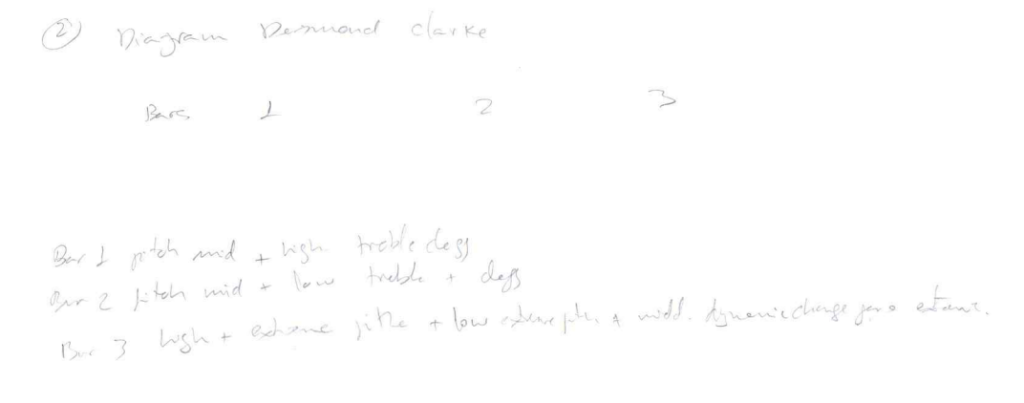
b) Desmond Clarke: Sinfonia (adapted)
The sense of the pieces is very open and straightforward.
Bar 1 Pitch mid + high treble clef
Bard 2 Pitch mid+ low treble clef
Bar 3 High treble + extreme pitches at both spectrums + dynamic change.
The title Hommage a Webern evoked string instruments in my imagination. However, the challenge was to achieve a balance between high and low-pitch instruments. Also, I didn’t want to unbalance the density of the orchestration as per the fine balance of the piece. I was tempted to apply a different instrument to every other note, creating, in that way, an umbrella of timbres. However, I chose a more conservative approach. The flute and bassoon were selected to achieve a woody sound at the start and the end. To create contrast in the orchestration, a violin and cello were chosen to play the middle bar, where it seemed the principal role was. To keep the original density as much as possible, I only doubled the note on the second beat of bar 3. By doing so, I expected to introduce an element of surprise.
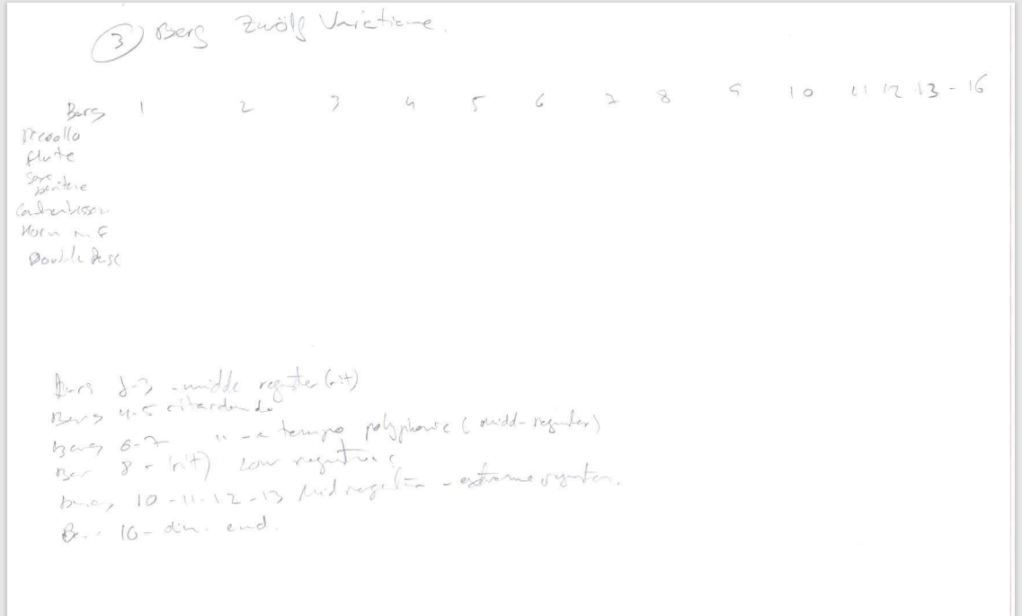
c) Berg: Zwolf Variationen uber ein eigenes
Bars 1-3 Middle register and ritardando
Bars 4-5 Ritardando
Bars 6-7 A tempo and first polyphonic
Bars 8 Ritardando and low registers
Bars 10-15 development and extreme registers.
Bar 16 Diminuendo to end.
After analyzing berg’s piece, I felt a wave-like composition. Pitches go up and down in a waving figure. There are some thirds in places ex. Bb 5-6, melody and counter-melody meet in the bass and treble clef. In bb. 13-15, the piece’s intensity is rendered to the treble clef. The choice of instrumentation was in line with register and density. The idea was to create a wind quintet. However, changing the oboe for a piccolo due to the penetrating power. The clarinet was replaced by a baritone saxophone due to the warm dark sound. And the Bassoon was replaced by a contrabassoon to add extra darkness and warmth to the piece. The addition of double bass felt necessary to accommodate some lower-pitched notes.
 Orchestration and Arrangement